Wednesday, October 31, 2018

13 Books for 2018, So Far. Just 3 More To Finish!!


Well, here I am, at the sunset time of 2018.  I'm down the last two months.  I’m overdue on one deadline right now, but the book is written.  I am still editing it and expect to publish it, along with the last two books in the Dominion series, before the end of the year.  When I started the year, my goal was to publish 16 books before January 1, 2019.  It appears that I will make that goal.


It feels good to accomplish a tough goal like that.  I will have to work much harder to reach next year’s goals.  I am looking forward to the challenge.  Next year will bring a new variety of stories to my bookshelf and a lot more work behind the scenes.  Even if I only reach half of next year’s goals, I will really feel good.
 

I’ve learned a lot about myself and a lot about writing during this past year.  I have a few more of the older stories to edit and publish, but I have a lot of new ones coming to my bookshelf.

I hope you like the flavors I’m offering.

Until next time, Jene   

Saturday, July 21, 2018

The 7th Month Save


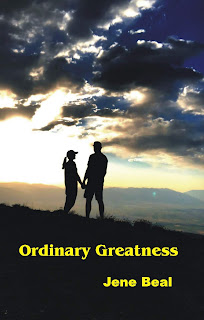
https://www.amazon.com/Ordinary-Greatness-Jene-Beal-ebook/dp/B07FNX8BCB/ref=sr_1_4?ie=UTF8&qid=1532202082&srHi all, it has truly been a busy few months.  In an attempt to finally publish my stories, I had set a goal for the year to publish at least one book a month, and to publish one additional book a quarter.  I had pictured that I could time it to publish my books by the first of each month.  I thought it would be challenging, but I never realized how difficult it was going to be to stick to my monthly and quarterly goals.

I knew that I would have ample time to proof read each book three or four more times during the month before publishing.  (I’m certain that I’ve missed errors, even after going through each of book at least 20 times since they were written.  Every time I read through a story, I find errors and things to change.)  I also knew that I would have time to blog about and advertise my books, while also doing additional writing on new material. 


Everything worked great in theory, however, I hadn’t planned for everything.  I didn’t plan for traveling, for extra work around the house, automobile troubles, the death of my father, the death of a cousin, and a few migraines.  Still, I’ve held my resolve, and though I have been late a couple of times, so far I have managed to stick to my goals.


This month, I am nearly three weeks later than I wanted to be with my quarterly book.  This makes 10 books for the year and I’m feeling stressed, but I feel good that I haven’t crashed and completely lost control of things.  I worry that if I miss my goal for one month, I might rationalize and soon my resolve would die and I might quit.  


So, even though I feel like I’m driving down an icy road and I’ve gotten myself into a skit and I’ve over corrected a few times, I’m just going to take a breath and work to bring myself out of the skid long enough to meet that next deadline.


I hope your lives are more controlled than mine and that you find joy in whatever you do.


Until next time,
Jene

Wednesday, May 16, 2018

Sore Muscles

Last month was a frustrating month. I’m a little late announcing the publication of my latest book, Dominion 5: The Innovator, even though it was done within just a day or two of my planned time. So, here we are in the fifth month of the year, meeting yet one more goal.  That's five months, five goals, and seven books for 2018 so far.

For two weeks Dominion 5: The Innovator has been available on Amazon as both an e-book and soft bound hard copy.  

Wow!  This goal was the toughest to reach so far this year.  I allowed several distractions to keep me busy.  After a vigorous fight with myself, I was able to remember how important this was to me.  I focused long enough to finish.  I’m very close to reaching that next goal, which is a good thing.  I will be certain to let you know right after I get done, and not save it for weeks to announce it.


When I was in high school, I ran on the track team.  Each year, when the season started, no matter how conditioned I believed to be, the first few days of practice was always grueling.  My body would be stiff and sore and my lungs would burn.  I remember telling myself how I would make certain to stay a lot better conditioned for the next year.  Yet, each year I would face the same kind of pain and anguish.  I’m hoping that having monthly deadlines will make it easier to keep from getting “sore muscles and torture of conditioning” with each deadline.


I hope your conditioning and your goals for the year are going better than mine. 
Until next time,

Jene 


Monday, April 2, 2018

From The Ashes Is Available

From The Ashes is perhaps one of the most fun books that have written.  I still smile about several scenes from the story.  It’s one of my favorites. 

When I was around eight or nine years old, my family went camping in Six Mile Canyon above Sterling, Utah at Twin Ponds.  It was an incredible camp.  I can’t remember how long the camp was.  It must have been before we got a milk cow, because it seems as though our camp might have lasted about a week. 

I had a lot of fun, because we were camping with some cousins.  I think we “accidentally” fell in the lake on a daily basis.  After a couple of days at the lower lake, we packed up our camp and went from the lower lake to the upper one.  My cousin and I hiked back and forth between the two lakes quite often after that.  There were aspects that we liked at each lake.  I have loved camping ever since that experience. 

It has been fun to write about something that I really love to do.  It is even more fun to write about the challenges of camping.  I hope you have as much fun camping in this book as I did while writing it.

Thanks for reading. 

Until next time,

Jene


From The Ashes, a book by Jene Beal

Charlene and Jack are haunted by the loss of past love and look for an escape to a new life, but through a mistake, they find themselves together and soon find it hard enough just to survive the elements let alone each other.

Charlene is a widow, whom everyone calls ‘Charlie.’  She has been sent by her company to save a business. Meanwhile, Jack, divorced, is hoping to start a new career as a tour-guide and outfitter. He is hired to show a business man the ultimate outdoor experience.

Charlie is a city girl. Her definition of camping is any hotel accommodation below 4 stars.  Jack is a country boy.  His idea of dressing up is the full camouflage look.
 
The pair clash from the moment they meet.  After the first day of camping, they both want to return home as soon as possible.  Can they endure two weeks together when everything goes wrong?

The story is set in the rocky mountains near Leadville, Colorado.

From The Ashes - Action Adventure/Romance


Friday, March 30, 2018

The Flyer is Published

When I was a young fellow, my brothers and I would hike up on the foothills above town on property that my father owned.  We would let our imaginations run wild.  We would act out everything from western battles to space exploration.  Our minds never seemed to lack for a new scenario.  I guess I never really grew up.  My mind is still conjuring up imagined scenarios and stories of make-believe.

Each time I finish writing a story, I feel a sense of accomplishment.  After that I have a feeling of great relief.  Sometimes I marvel about the fact that the story actually came from me.  Next, I begin to think about all the ways I should improve it.  Then I take a breath and pick up the next sketchy idea.  I begin to wonder how I will be able to write that idea into a story that will entice me to read it more than once. 


I’m glad to introduce you to the next book in the Dominion series.  The book is available as an ebook or paperback.  As I wrote it, I found that the Dominion story became more enjoyable with each new addition.  If you decide to read the series, I hope you have the same experience that I had.

Well, onto the next sketchy story idea.
Until next time,
Jene


Dominion 4: The Flyer, a book by Jene Beal

Jethro Abel has become one of the best pilots in the colonial military. He is conscripted by General Asher into a high-stakes assignment. His piloting skills, and his ability to think outside the box, attracts the attention of General Harrison, who invites Jethro to fly for the prestigious Red Squadron. Jethro is made captain and assigned to lead the covert team named the Stingers. He and his people are expected to accomplish the impossible. Jethro and the Colonel finally speak to each other and the lines between them are drawn.

The Flyer is the 4th full length novel in the Dominion series. The Flyer is a fast paced futuristic Science Fiction / Action Thriller.

Thursday, March 29, 2018

4 Goals, 4 Months, 6 Books!

After a difficult month, I am happy to say that my new year’s resolution is still holding.  In years past, I allowed so many things to stand in the way of my new year’s resolutions and my goals.  Publishing is always a little intimidating.  It is not the easiest thing to put a creation out for public scrutiny. 

I mentioned this to an artist friend, who feels the same about his paintings.  However, he pointed something out that I hadn’t considered.  Every piece of art, no matter what form, is criticized.  Each piece gathers critics, a few who hate it, fewer admirers who love it or the greatest number who are completely indifferent to it.  Once the creation is out there, the only thing an artist can do is to start the next project. 

Perhaps we can use the criticisms to change how we do that next creation in order to grow the numbers of admirers.  I suppose the lesson is, try to target your market, satisfy the creator inside, present it and then move on.  It’s the Printing business all over again.  I’m always learning from the truths of past lessons and experiences.

Well, I need to get to work so I can reach the next goal.

I hope your goals are working out even better than mine for the year.

Until next time,

Jene

Thursday, March 1, 2018

3 Months, 3 Successes, 4 Books

It feels great.  I've kept one more deadline and one more goal (to publish a book a month).  I am looking forward to making the next goal too.  I am feeling hard pressed to finish my next book, but I know I will be able to make it.  Of course, next month's goal is to publish two books.

The characters in The Cadet are just getting prepared for all the books that come after it. For those who read it, I hope that you have as much fun reading it as I did writing it.

So, until next time,

Jene Beal


  Dominion 3: The Cadet, a book by Jene Beal
As the forces of Dominion gather against him, Jethro Abel sees the need for more training. He is sent to the academy to receive it. Because of the advice of a friend, Jethro learns to fly masterfully. He learns a great deal more than to just fly. Though they continually search, the Colonel and his people are slow to find Jethro. Once they do, Jethro’s life becomes very complicated.

The Cadet is the 3rd full length novel in the Dominion series. It is a fast paced futuristic Science Fiction / Action Thriller. 


Monday, February 12, 2018

(Relieved) Second in the Dominion Series

I am so relieved to have the second book in the Dominion series published and available.  I'm already finishing details for the publication of The Cadet, the third book in the Dominion series.  I can hardly wait to have them all available.

This book was another short one.  It is a faster read than the first one, or at least it was for me.  I learned a few things from writing this book.  The bad guys are key.

I hope your writing and publishing goes at least as smoothly for you.

Until next time,


Jene


Tuesday, January 16, 2018

The Guerrilla - Done!

/ref=sr_1_2?ie=UTF8&qid=1516160815&sr=8-2&keywords=jene+beal


lDominion 1: The Guerrilla

Can you believe it?  I finally published the first book in my new science fiction series, Dominion.  I’m getting ready to publish the second book in the series next month.

In the meantime, in just a few days, Fixing Love will be available on amazon.com also.

I’ve got a lot happening this year.

Over the next several months, I will be sharing a few things that I’ve learned about writing over the past few years.  Some are simple small things and some are life changing.  Don’t worry, I’m not selling any of that.  It will all be for free.  The only thing I’m selling is my stories.

Until then, Jene

Wednesday, May 25, 2016

Getting It Done

http://www.jenebeal.com/
What is the most important aim when you start writing the story?  Yes, you want to tell a story.  Yes, you may have a point to make.  However, the most important part about starting a story, is to finish it. 

When I wrote my first novel, it took me ten years to put an ending on it.  I worked on it at least 3 out of the 7 days of the week.  When I wrote, I would be writing for 3 or 4 hours at a time.  I almost never had any problem coming up with something to write, though I did have some days when I didn’t like what I wrote or couldn’t think of anything worthwhile to write about that particular story. 


So, why did it take so long to write that first story?  In the beginning, I would write 10 - 50 pages, then I would read and re-read what I had written.  I could never make it perfect, though I kept trying.  I would change, rewrite, change and rewrite, until sometimes I lost the story I had started with.  Eventually I got frustrated.  I nearly gave up. 

Then I found out that my father was going in for an operation.  I suppose that it caused me to look at my life and the temporary nature of it.  It occurred to me that unless I focused on the work, I would never get anything done.  The weekend before my father was to face the knife, I went camping with my family.  While there, I set my mind to write as fast as I could.  I wrote during the daylight hours.  I wrote by lantern light after dark.  I worked well into two nights of my four-night camp, and finally I finished the story. 

I timidly presented my handwritten work for my father to read while he was recuperating.  I knew that it was far from perfect.  He seemed to think that it was as good as anything else he had read, perhaps even better than most.  I later sent it off to a sister-in-law who typed it.  She also enjoyed it.  Since then, I have edited, rewritten and adjusted the story slightly.  It is pretty much the same story now, as it was the day I finished it. 

The point is, you will never have a story, until you write it to the end.  Once you finish it, you can spend all the rest of your life changing, adjusting or rewriting it if you choose, but the important thing is the story will be written. 

I have met several people who get a good start, but spend the rest of the time starting over again.  Or they fret over the fact that it is not perfect.  Guess what?  I’ve written over 40 80-100,000 word stories now, and every time I read through one of them, I find a billion things to change.  The fact is, an artist is never really satisfied.  Art is subjective.  Our minds see it differently, as we look at it from different angles.  At some point we need to decide to move on.  We have to call the work done, and get started on the next project that will drive up the wall.

Starting and ending a story is easy for me now.  The hard part is the editing and deciding between the point where I’ve created art or have gone too far or not far enough and created a distortion of my art.  Most times I have found that the original inspiration is the closest to what I want.

Whatever you want to do is up to you, but for me, once I start, my goal is to finish.

I hope someone might find my experiences helpful.

Until next time, Jene

Wednesday, May 18, 2016

Purposeful Interruptions


I have a friend who tells me that writing is a lonely job.  Though I really never feel lonely, I will say that my days are quiet and sometimes I find myself making calls to family members, even when there is nothing pressing to call about.  My wife thought I might get lonely during the day, so she got me a dog.  The dog is deaf and she does a lot of what she wants to.  Most of the time she is trying to force me to play ball with her, just as I find myself right in the middle of the most important parts of the story.  (Of course, each paragraph seems to be equally as important.)  She only does this about three or four times an hour.  Needless to say, she spends more time outside than she would like to.   

That being said, I find myself eating better, making regular trips to the restroom and even doing some of the other things from my "TO DO" list during those interruptions.  I suppose we all need some way to stay on track.  A timer or alarm clock might be easier to take those breaks, but if you are having trouble getting away from your writing before it’s past your bed time, then you might consider getting a dog to drop her ball on your keyboard from time to time.

Until next time,

Jene.

Monday, March 17, 2014

Before Starting A Story

Most people I’ve talked to, after they hear that I write stories, begin to ask questions about what I write.  If course, they ask other questions too.  As I talk to them, it soon seems clear to me, that they believe, that I wake up with an idea in the morning, and the story magically appears as a published book the next day.  They think that I must possess some kind of magic that they do not have.  It is as if it would be work for them, where it is automatic for me.  They don’t see the amount of work that went into the story, before I even start. 

It is hard work to figure out what to start with.  Once I finally do come up with an idea that satisfies me, then the real work begins.  The more clearly I define the story the easier and quicker it is to write it.  The story which took the longest for me to write, took me 10 years.  The shortest, took me 6 days.  The shocking thing about that fact, was that the one with the most number of pages between the two, was the one that took me 6 days to write.  It was the one I did the most homework for, before starting.  From start to finish, my path was very clear to exactly where I was going to take the story next.  There was also no wandering around, which would cause a lot of deletions and rewrites.

The most important part of writing a story, is thinking up a story line or plot, (screenplay writers call this a log line).  That is the backbone of any story.  Sometimes people will ask me how I come up with my ideas.  For me, ideas are too easy.  I get them as I watch people.  I make it a practice to try to visualize those people out in their daily lives.  The ideas explode.  In fact, watching any one person will produce a dozen story lines.

It is amazing when we think that people are pretty much the same, the world over.  Our stories are very similar.  The situations and our particular circumstances may be different, but love, loss, virtues, vices, health challenges, feelings of danger and mortality are much the same for all of us.  It has been that way since the beginning of history to the present day.  I suspect that those experiences will always be something we can all identify with, no matter whose stories they are.  It is because we have all had those feelings to a certain degree.

Good writing, is the art of telling a story in a way that people can feel and see the tale, as if they were participating in it.  A good writer has to tell it in a way that they themselves will feel those emotions.  If the writer doesn’t feel it, then the reader won’t.  If the reader doesn’t, they will not be able to relate to the story and will be bored.  If they cannot relate to our characters or what those characters are going through, our audience will not finish reading the story.  They will probably not pick up one of our works again.

So when I write, I try to find a basic story that I believe other people will be interested in.  Of course it has to interest me too.  As a writer, I must become passionate about it, or it will become as laborious to the audience, as it does to me.  If it doesn’t excite me, it won’t excite them.  Reading books and watching movies to see what others are interested in, is very helpful.  Just look to see what is selling well, and you will find what people are interested in.

One fact that a writing class will probably not tell us about, is if we want to sell the story, then we have to write something that others will want to buy.  Whether we are writing for book publishers or the movie industry, the cold hard fact is, it is all about the money.  Publishers and movie makers really don’t care about how good the story is, but whether or not it will sell.  Of course, it won’t sell unless it is an interesting story which will grab the audience and it has to be written well.  So as I write, I try to keep that in mind.  I have to write something that will appeal to more than just me, while remembering that it has to make money for the publisher or movie maker.

If we are writing for our own vanity, there are many out there, ready to accept our money to put it into print.

After I come up with a story idea, then I figure out a new way to present it.  I am hoping to present it in a way that the feelings written are felt more strongly.  It is important so the audience has a good connection to our characters. 

To write a love story taking place in a small town, is not necessarily a good start.  However, if one of the people is blind, now that creates a whole different way of approaching it.  Already we have a certain amount of empathy for both characters and we haven’t even started writing.

To write about someone flying in an airplane, sounds boring.  However, add a hijacker, or knock off an engine, or cause a leak in the fuel tank while flying over an ocean, and we start taking a better hold on the armrest of our chairs. 

There are writers who have a glimmer of an idea and sit down and just start writing.  Some people are really good at that, because they have the whole story mapped out in their minds.  I used to think that I was good at that.  Most of my early work was done this way.  It is true, I was able to come up with some pretty impressive writing.  At least it was impressive to me.  The reader may or may not be that impressed.  The problem with that strategy is that most people, (me included), will have a tendency to wander.  Our stories become 700-1,000 pages, when we could have told the same story more effectively and more movingly in 300-500 pages.  Most publishers won’t even look at a manuscript that is longer than 350 pages anymore.

There are even famous authors who have sold a lot of books, who have obviously just started writing without really knowing where they were going to go with it.  It’s bad enough when it is a stand alone story, where there is nothing to measure it against.  But if they do it as a series, then they get into trouble.  People come to expect certain things from an established character.  If the character suddenly changes from what the readers have come to expect, it causes a disconnect.  A writer wants his character to grow over time, but if he is a completely different person over night, and we don’t see the changes developing, then as an audience we are turned off.  The character is no longer believable.  It will taint the whole story.

What would happen if James Bond suddenly became an elementary school teacher and never went back to the spy business?  We would all feel betrayed.

We have all gone to movies, or read books where we have experienced that disconnect.  The recent movie entitled “The Lone Ranger” is a good example of that.  Everyone had expectations of the ranger.  They expected him to be the hero.  They expected Tonto to be the side kick.  The movie lost big, because they didn’t meet the expectations of the audience.  That was because people had already become acquainted with the characters.  I suspect everyone’s experience and the financial outcome would have been different, if the movie had been entitled “Tonto.”

So, back to the point.  Now days, I start by making certain that I know what the story is supposed to be about.  Then I decide on a beginning or an opening.  Then I decide how I want it to end.  Then I mark out the major steps or conflicts along the way to get from the beginning to the end.
I quickly map out a very brief path for my characters to get there.  I will also decide what characters I am going to need.  I try to develop a bio for them, so I know who they are.  I want to make certain that they are the characters I need to advance my story from one end to the other.  I need to make certain that they are the ones who will create the emotional investment that will hook the audience.

This whole process can take as little as a day, or as long as a month or two to complete.  It depends upon how complicated the story is.  It also depends upon how much research I need to do to create a believable background.  The better I do this, the more believable my story. 

Because I just sat down and started writing without the preparations, I’ve written a few stories that need extensive overhauling.  We don’t want to make our main character an expert on roses, but as an author, we don’t know the first thing about roses.  We cannot assume that our audience is as ignorant as we are.  If we write about the sights and sounds of the flower garden, and start to describe plants or our actions, our ignorance is immediately exposed, making the whole story suspect.  Describing an ocean voyage, without ever seeing water, let alone riding on a ship...

There are some things that you can easily get away with, being abducted by aliens is not common, so our audience will not be able to compare that with their experience.  Traveling in space has been done, and though we may not have experienced that, others have and have described it.  Video has been taken so we could see it.  If you pour out a pitcher of water in space, does it soak your feet?  Gravity is a problem.

So for now, mapping out my story line, and a brief outline are the steps I’m working on.  I’ll get back with you, once I have worked on my plot line, and figured out the kind of story that I want.  Then I will start by sharing how I come up with characters.

Until then, may ideas come to you easily.

Jene

Wednesday, March 12, 2014

Writing Habits

When it comes to writing habits, everyone is different.  While working for myself in the print shop, I was putting in crazy hours.  There were never any set hours for me.  Owning your own business had its advantages, as well as its disadvantages.  For me, the disadvantage, was that I couldn’t have a regular schedule.  The print shop had deadlines.  Many times it required that we were working until the job was done.  Sometime that was late at night, or sometimes I worked until late the next night.  It was not unheard of to go for three or four days, with only catnaps here and there.

Even with that disadvantage, I still did a lot of writing.  I use to write whenever I was not working at the shop, and was still awake.  I learned the hard way that I had to pace myself. Writing has been described as a lonely activity.  Some people have to do it in very quiet secluded places, other wise they would be distracted.  Others find noisy places, so they will not feel the loneliness.  Others find places where there are people to observe and get inspiration that way.  Others listen to music.  I don’t think it matters where you write.  There are no rules.  I think a person can do whatever helps them do their best work. 

Myself, I can write, no matter what else is happening, however I prefer to listen to soft music while I write.  I have written in hospitals, trains, planes, at camping, while others are watching television, or in the still of the darkest loneliest night.

Now that I write pretty much full time, I treat it like I would any job.  My back and neck will not allow me to sit still for as long as I would like to write, but I still get in about 10-12 hours a day writing.  There are days, when some of that time is spent researching between scenes.  Some of that time may be spent making notes of what I’ve written and how I will tie it into the next scene.  Sometimes I listen to inspirational messages and music, I pace while meditating, and I read. 

However, most of that time I’m usually writing.  If I am in the zone, and things are coming quickly, then I stick with it, even if my spine doesn’t like me.  When thoughts are coming fast, I don’t even notice the clock.  I usually try to knock off about the time my wife comes home.  Sometimes that’s easy, and sometimes I’m in the middle of a streak. 

I’m blessed with a wife that isn’t bothered when I stay with the story from time to time.  It doesn’t happen very often, but it does happen.  I do most of my heavy writing in the morning.  I do projects and blog writing in the afternoon or evening.  I try not to let trivial things interrupt my story writing until afternoon.  That doesn’t always work, but that is my intent.

That being said, it is doubly important to me these days to rest up.  I try to get to bed at a decent time, eat right, get some regular exercise and spend some time each day to read or listen to scriptures or uplifting spiritual messages.  I find the results are more and better ideas.  When I feel good, my writing flows better.  When I’m in the zone, and I’m rested, I have been known to punch out 300 pages of story or more in a week.  Many times I may only have to change a few things, when editing it. 

On the other hand, when I’m not in the zone, or if I’m not feeling well, and I go ahead with the story, I may need to change 100 pages or more at a time.  There have been some stories that I have scrapped everything and started over.  Health can play a big part, so I don’t disregard it.

I write for business 6 days a week.  I leave it alone on Sunday, although I will write letters and notes then.  Everyone needs a day to rest, energize and be spiritually recharged.  Without it, we get stale and boring.  We feel that way too.  A person can burnout without that recharge.  I believe the only times I have had “writer’s block,” has been when I’ve allowed myself to become tired or spiritually drained.  The audience can feel the unease in our story.  I can feel it when I read over what I’ve written before.  It’s painful, but I’ve learned that it is better to go back and rewrite those places, after I have spiritually recharged.

The most important thing for me, when I’m starting out on a new project is to organize my self and my surroundings.  I clear my desk, sort through my drawers, get rid of useless notes, rewrite notes so they are legible, (if they are applicable.)  File any old stories, or current stories that I am writing on, and make certain that everything is in its place.  Then I start pondering new ideas.  It’s like getting a recharge, as if starting out completely brand new.

Well, I need to get to work straightening up.  I’ll get back with you when I’m ready to start.  I hope you are better at preparing than I am.

Until next time.

Jene

Tuesday, March 11, 2014

Why Write?

When I was in 3rd grade, a man by the name of Wilson Rawls came to our school to plug his new book, Where The Red Fern Grows.  (He also authored Summer Of The Monkeys.)  Our teacher asked us to write our own stories.  I took that assignment seriously.  After writing it, my mother (always a good sport for that kind of thing), typed up all ten pages, careful to include all of my spelling and grammatical errors.  My teacher was somewhat shocked by the lengthy nature of the story.  (3rd grader stories are rarely more than a single paragraph.)  She told me that I had a knack for such a thing and encouraged me to keep writing.  I was happy to do just that, as I enjoyed writing stories very much.  I have been writing stories ever since.

I have written over 50 full length novels so far, several more short stories and I have hundreds of ideas waiting in line to be written.  I’ve self published 4 books as an experiment.  I wanted to know if they were good enough to sell.  They were the very first stories that I wrote as a youth.  I’ll have to admit, they have done better than I expected.  Of course, I still have not found a way to effectively market them, but I think I have found a few ideas that will change that.

When leaving college, I imagined myself as a great author, but the need of a regular paycheck took priority.  Between work, family and other pursuits, that vision of becoming a well-known author faded.  However, over the years, I have read what I could about writing, and I continued to write whenever I had a spare moment.  It was my hobby, my escape and my therapy.

Now my life has changed again.  The children are grown and gone, my back and neck are  a daily challenge.  Writing is now once again a priority.  However, since those early days, I have learned much about writing a story.  I have gained a great deal more life experience, and I understand people much better.  Most importantly, I have gained a greater desire to write than I have ever had before.  I have opened myself to other types of writing than just books of fiction.

I believe there are a lot of people out there who dream of one day writing a book.  Most of those people, who envision writing that next great novel, doubt that a book is within their capability.  I am a guy with dyslexia.  I seem to be handicapped at spelling and following grammatical rules.  If I am able to write a book, then anyone can.  Fiction requires more creativity, but even that is possible.

From time to time people ask me how I can write a whole book.  The best answer I can think of, is to tell them, that it is done one word at a time.  A book is hard work.  Writing a good book takes vocabulary, ability to be understood, patience, discipline and planning.  If you can do that, a book is possible.  Today the computer has magic functions like spell check and a grammar check. 

If you start thinking of the average book of 350 pages, that might seem intimidating.  However, to think of 500 or 1,000 words, it is not so bad.  This post is already 900 words.  A book is a cumulative thing, one page at a time.  However, the last thing that we should be worried about is the length of the story, (unless it is too long).  Telling the story should be the focus.  After all, people don’t ask book reviewers if the book is thick enough.  They only care about the story.

Years ago in that little classroom, Wilson Rawls told us that he was a hillbilly who had once had a couple of dogs.  He said that he was not a writer.  He told us that he married a school teacher, or he could never have made his story make sense.  He held up a huge stack of paper to show how much he had written, in order to get that single book finally acceptable.  It occurred to me, that if he could do it, I could. 

A few years ago, I renewed my interest to publish, when I copyrighted my first book.  I was shocked as I scanned over the copyright records.  Wilson Rawls only wrote two stories.  He wrote several studies about those two books, but he never wrote another story.  Or at least he never published any others.

On this blog, I will be offering a few thoughts, which might help someone else burning with the desire to write.  Perhaps they can avoid pitfalls and obstacles that plague most writers out there.  I will not claim to be some kind of expert.  Don’t expect to find any books or programs to purchase on the subject of how to write a story.  Any writing hints, or any word of wisdom about the subject of writing, is absolutely free here.

This blog will come with thoughts, ideas and samples.  If your desire is writing, I hope you will find this blog interesting.  I’m just days away from starting a new story.  I thought I would take you through each step along the way, as I begin the writing process.  So, I’ll post again in a few days.

Until then, may your ideas be plentiful.

Jene